Vitiligo
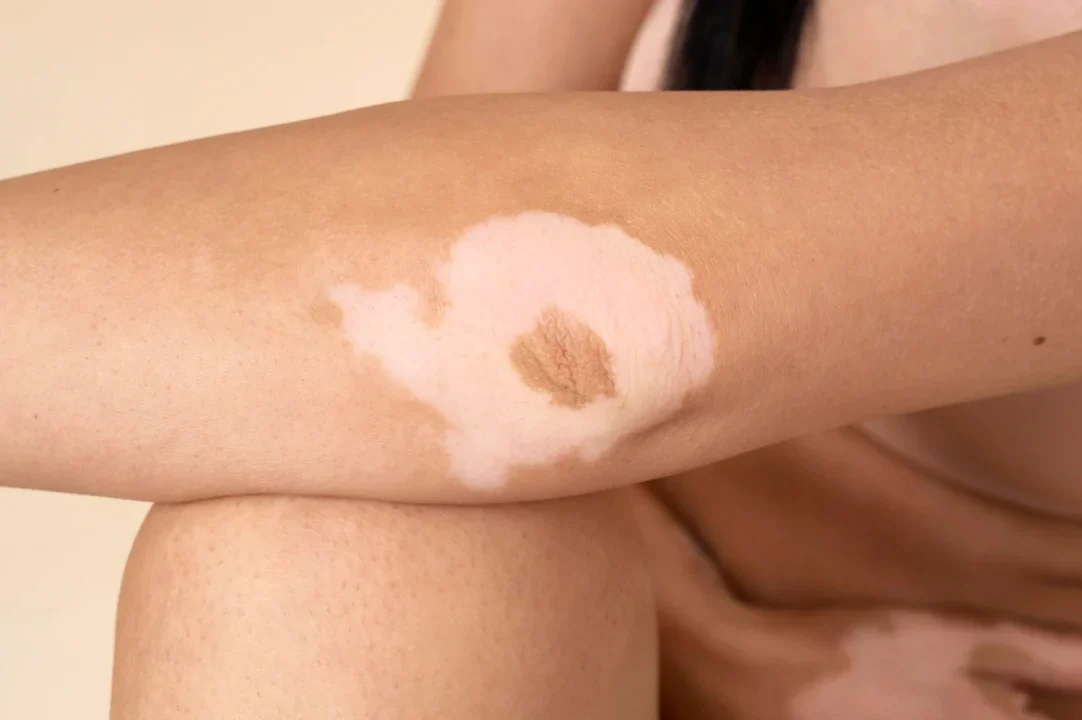
Clinical picture of vitiligo
Vitiligo is a chronic pigmentation disorder of the skin. In the affected areas, pigment cells are either absent or have impaired function. This results in white patches of skin, which frequently appear on areas exposed to the sun, such as the hands and face. The condition can develop both in childhood and in later life. The likelihood of developing the condition is independent of gender, skin type or ethnic origin.
Vitiligo may be associated with other autoimmune disorders, but in itself does not initially pose a health risk. Nevertheless, the cosmetic effects can lead to considerable psychological distress. Spontaneously occurring and locally confined vitiligo can cause just as much distress to the affected person as larger and more persistent patches of depigmented skin.
How does UV phototherapy work for vitiligo?
UV-B 311 nm narrow-band phototherapy has a positive effect on the immune system by reducing or even halting the body’s own breakdown of pigment cells (melanocytes). This prevents the condition from progressing. Furthermore, the melanocytes are stimulated to migrate from the hair follicles into the upper layer of the skin, where they release pigment (melanin) once again. In this way, the affected areas of skin regain their pigmentation and thus return to their original colour.
Due to the mechanism of action, repigmentation takes some time to set in, meaning that UV phototherapy must be administered over a longer period. Furthermore, the process is dependent on the presence of hair follicles, meaning that some areas of skin are more likely to repigment (face and neck) whilst others (hands, feet) are less so.
Application and Prospects of success
UV phototherapy is administered three times a week. The dosage is based on the erythema threshold. The initial dose must be chosen much more cautiously than for other indications, as it is the pigment-free skin, rather than the healthy skin, that is decisive for determining skin type. Healthy areas of skin must always be protected with suitable UV protection to prevent hyperpigmentation.
UV phototherapy requires patience, as the first signs of repigmentation only become apparent after a few weeks and the total duration of treatment can extend over 9 months. If no repigmentation is observable after 3 months, the next steps in the treatment should be discussed with the doctor. Treatment outcomes vary greatly from person to person; some patients respond relatively quickly and satisfactorily, whilst others respond very slowly or hardly at all. Generally, better results are seen in younger patients and in cases of skin lesions that have been present for a short time. In around 80 per cent of cases, lasting repigmentation can be observed one year after discontinuing UV therapy.
Alternative treatments
Vitiligo is primarily a cosmetic skin disorder. The aim of any treatment is to prevent the condition from progressing and to achieve repigmentation of the affected areas. Given the relatively low medical severity of the condition, any treatment option should involve as few risks or side effects as possible. The choice of treatment also depends on whether the vitiligo is stable or rapidly progressing.
Treatment usually begins with topically applied anti-inflammatory creams. Systemic medications with additional immunosuppressive effects are more effective, but are also associated with more severe side effects. Compared with UV phototherapy, clinical experience with systemic medication is limited. In addition to conventional UV phototherapy using fluorescent tubes, UV excimer devices are also used; these enable ‘targeted’ UV phototherapy but, due to the technical complexity involved, can only be operated by specialists. Conventional UV therapy, on the other hand, can be carried out at home. Finally, surgical procedures should be mentioned; although these are particularly effective, their use is limited due to their invasive nature.