Psoriasis
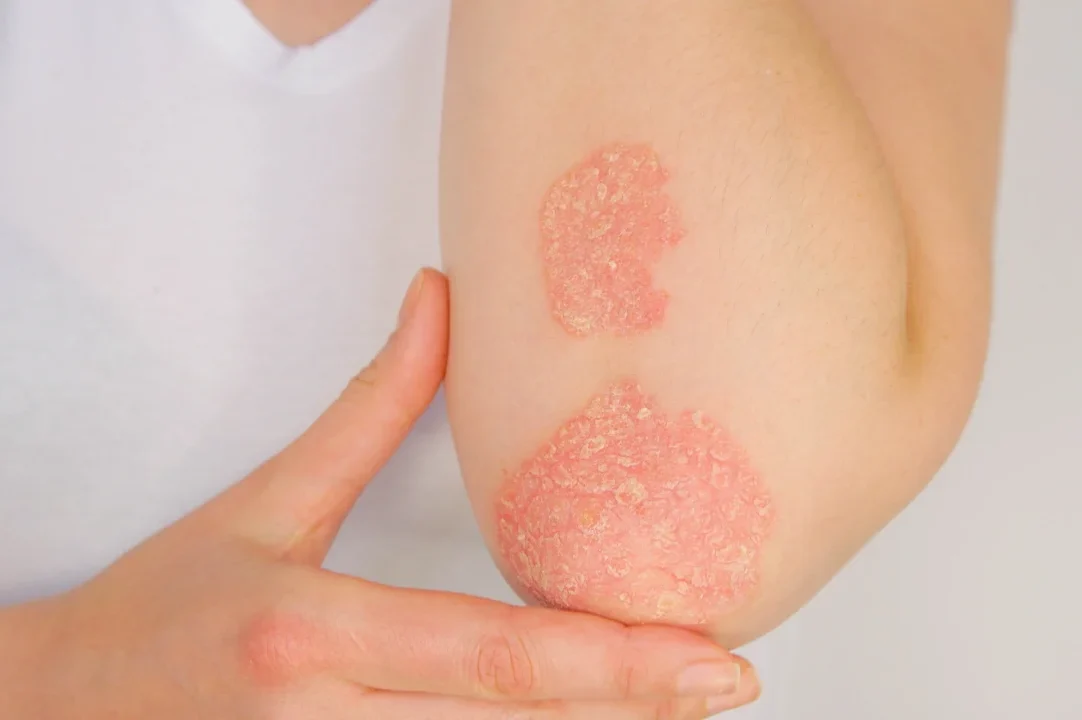
Clinical picture of psoriasis
Psoriasis is caused by a genetically determined, abnormal immune response in the body. This leads to inflammatory processes, primarily in the skin, but in rarer cases also throughout the body. A disruption to the skin’s renewal process leads to the typical symptoms such as redness, flaking and itching. Psoriasis is particularly common on the scalp, elbows, knees and buttocks.
Psoriasis is a chronic condition and cannot be cured. It usually occurs in flare-ups, which can be triggered by internal and external factors. Treatment focuses on alleviating the symptoms, which place a significant psychological strain on those affected.
How does UV phototherapy work for psoriasis?
Many people with psoriasis find that their skin improves simply with increased exposure to sunlight. UV light penetrates the outer layers of the skin and, depending on its spectral range, is absorbed by different components of the epidermis. The narrow-band UV-B spectrum triggers various biological processes in the skin that inhibit inflammatory reactions and slow down the process of new cell formation. This can reduce disease activity and improve the patient’s quality of life.
Application and treatment objectives
Before starting treatment, thicker scales and scabs should be removed using a scale-removing agent to ensure the treatment takes effect quickly. A course of treatment usually consists of 20 to 30 individual sessions, to be repeated 3 to 5 times a week.
With the correct dosage and adherence to the treatment, 50 to 75 per cent of users should subsequently achieve a 75 per cent improvement in skin appearance as measured by the PASI score. The PASI score is an index of the individual severity of psoriasis and is calculated based on the percentage of body surface area affected, skin redness, the thickness of the plaques and the extent of scaling. Ultimately, what matters most to the user is their own perception and the improvement in their quality of life. Following a course of treatment, most users remain symptom-free for several months, and sometimes for even longer.
Therapeutic alternatives
Mild and localised psoriasis can usually be treated effectively with topical therapy, such as a corticosteroid cream applied to the affected area. For moderate and severe forms of psoriasis, various drug therapies and UV phototherapy are used. If treatment is ineffective, the patient cannot tolerate it or there are contraindications, newer, highly effective biologics are available in addition to conventional treatments.
The right choice of treatment depends on many individual factors and can only be determined in close consultation with the treating doctor. Another aspect is the coverage of costs by the relevant healthcare systems. Due to its high efficacy, few side effects and manageable costs, UV phototherapy has been an established and proven form of treatment for many psoriasis patients worldwide for many years.