Atopic Dermatitis
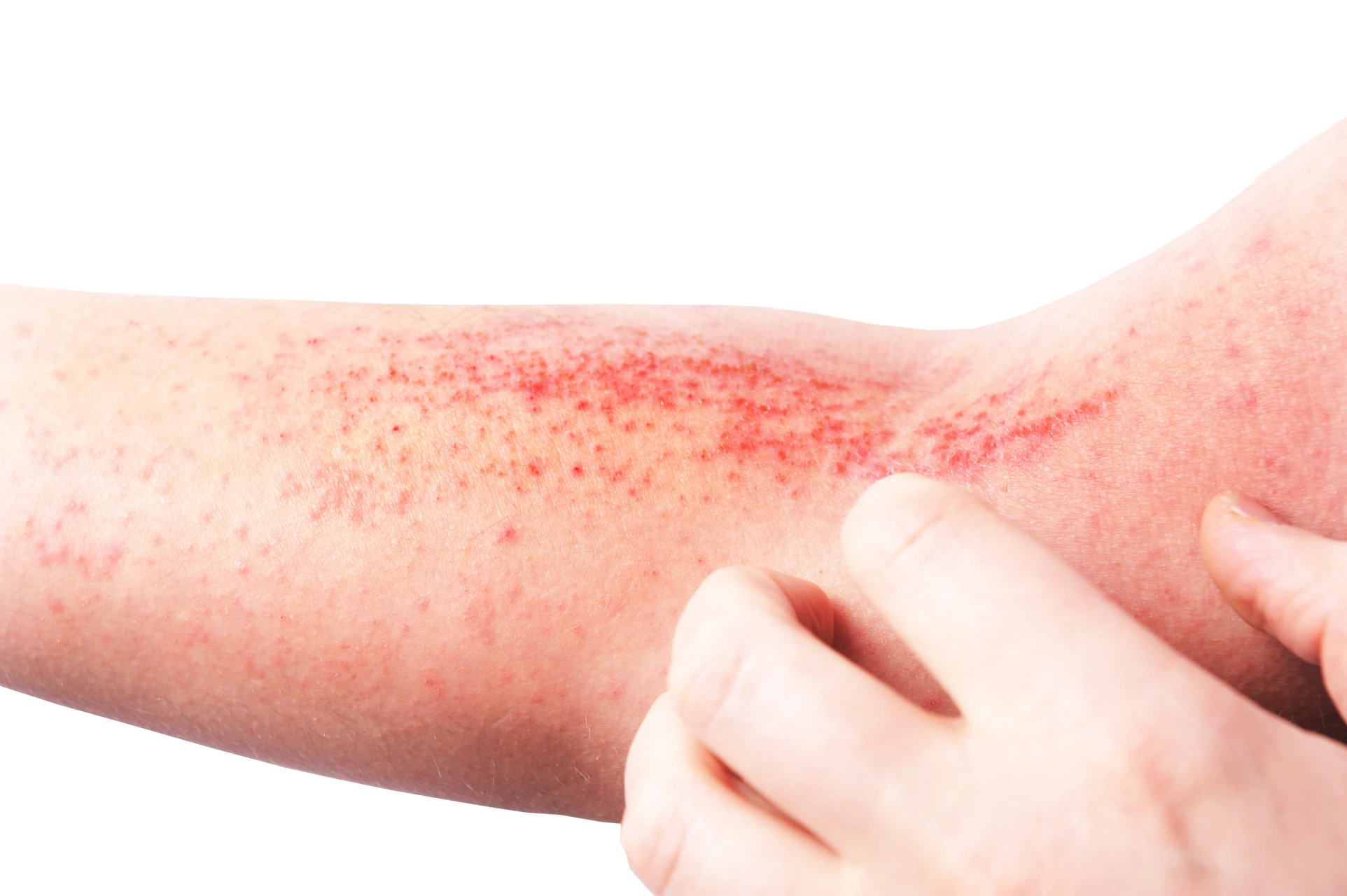
Clinical picture of atopic dermatitis
Neurodermatitis, atopic dermatitis, atopic eczema or endogenous eczema are all terms used interchangeably to describe a chronic inflammatory skin condition associated with severe itching. A key feature of this condition, which occurs in flare-ups, is a compromised skin barrier, meaning that the skin becomes not only drier but also more cracked and permeable to foreign substances and pathogens. Typical symptoms include red, inflamed patches of skin, which can develop into weeping blisters and eczema.
Atopic dermatitis is the most common chronic skin condition in children, but it also occurs in adults. The skin lesions tend to appear on different parts of the body depending on age. In young children, they frequently affect the extremities and the head, whilst in older patients they mainly affect areas of the skin subject to mechanical stress, such as the neck, the backs of the knees, the wrists and the elbows.
Atopic dermatitis is not limited to the skin alone, but is associated with an impaired immune system. In cases of atopic dermatitis, the immune system reacts more strongly to foreign substances that penetrate the skin. Both factors contributing to the condition – an impaired immune system and dry skin – are influenced by a genetic predisposition. Additional external triggers, such as allergens or stress, ultimately lead to acute flare-ups of atopic dermatitis.
How does UV phototherapy work for atopic dermatitis?
The soothing power of sunlight becomes apparent during the summer months, when many people with atopic dermatitis experience a noticeable relief from their symptoms. The UV component of sunlight triggers various, overlapping biological processes in the skin. As well as calming and suppressing the overactive immune system, the UV spectrum has an anti-inflammatory effect and improves the skin barrier.
Of the various UV spectral ranges, the UV-B 311 nm narrow-band spectrum and the UV-A1 spectrum have both proven to be equally effective following several weeks of treatment. Some studies suggest that the UV-A1 spectrum acts more rapidly. In other studies, however, the UV-B 311 nm narrow-band spectrum proved to be more beneficial in cases of chronic atopic dermatitis. The lower risk profile is a further argument in favour of the UV-B 311 nm narrow-band spectrum. In fact, the UV-B 311 nm narrow-band spectrum is used more frequently because it is also employed in doctors’ surgeries and clinics for other indications and is therefore more widely available.
Application and Prospects of success
The use of UV phototherapy for atopic dermatitis can lead to an improvement in the appearance of the skin and a reduction in itching, as well as complete remission. The severity of the condition and the therapeutic success are measured using the SCORAD index, which is calculated on the basis of the affected area, the intensity of the symptoms and subjective parameters. In two clinical trials, the SCORAD score improved by an average of 45% and 75% respectively, regardless of age, following several weeks of treatment with 311 nm narrow-band UV-B therapy. A further six months after the end of treatment, this figure stood at 75% in both studies, indicating that the therapeutic success is sustained in the longer term or may even improve further.
Treatment of atopic dermatitis with UV therapy is carried out 3 to 5 times a week and usually requires 25 to 30 individual sessions. The initial dosage is based on skin type and is gradually increased until the erythema threshold is reached.
Therapeutic alternatives
In addition to UV phototherapy, there are a wide range of other treatment options available for atopic dermatitis, which have anti-inflammatory, immunosuppressive and itch-relieving effects to varying degrees. These include topical creams and ointments, systemically administered medicines and subcutaneously injected biologics. Particularly potent treatments may be associated with corresponding side effects and are primarily used to treat active and severe flare-ups. More tolerable forms of treatment, such as UV phototherapy, are more suitable for managing chronic phases of the condition.